
This post is a record from the perspective of a MAGO developer who attended CES 2026, summarizing the trends of on-device and Physical AI that are shifting the focus of voice AI.
I am Nayoung Park, a developer working on voice AI at MAGO.
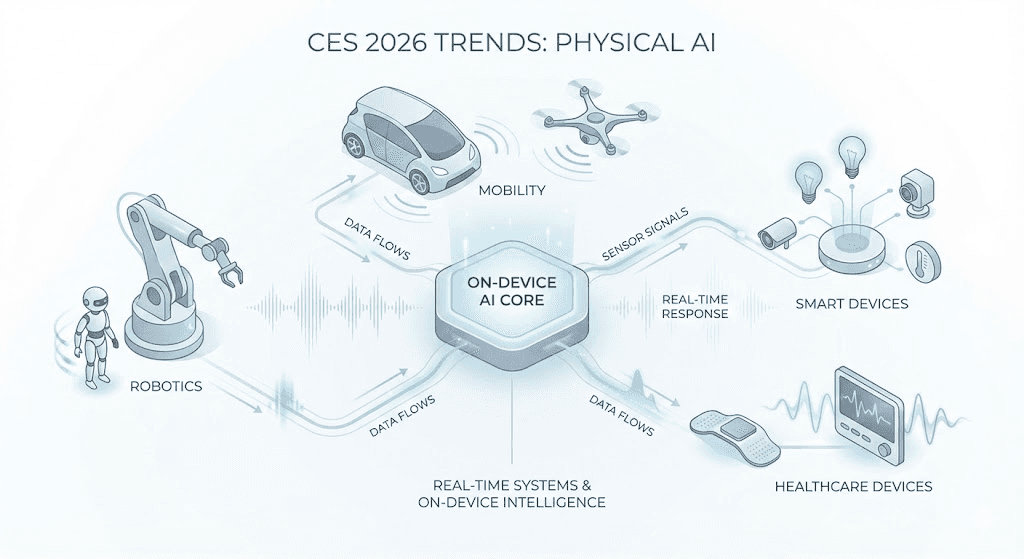
I documented the technological trends and memorable scenes that I observed at CES 2026 from a developer's perspective. CES 2026 was an exhibition that highlighted how the trends of on-device AI and Physical AI are becoming more pronounced, focusing on robotics, autonomous driving, and smart devices.
Particularly, it was impressive that voice AI is not an independent technology but rather a part of agents and real-time systems.
✈️ MAGO Developer's CES 2026 Record
This CES 2026 was an opportunity to experience firsthand as a MAGO developer where AI technology stands now and what the next steps might be.
The keywords that repeatedly came to mind while touring the exhibition hall were robotics, mobility, Physical AI, smart home, digital healthcare, and on-device. It felt strongly that AI is no longer technology confined to software but is now actively entering robots, vehicles, devices, and spaces.

🔎 Moments When the Need for On-Device Was Clearly Felt
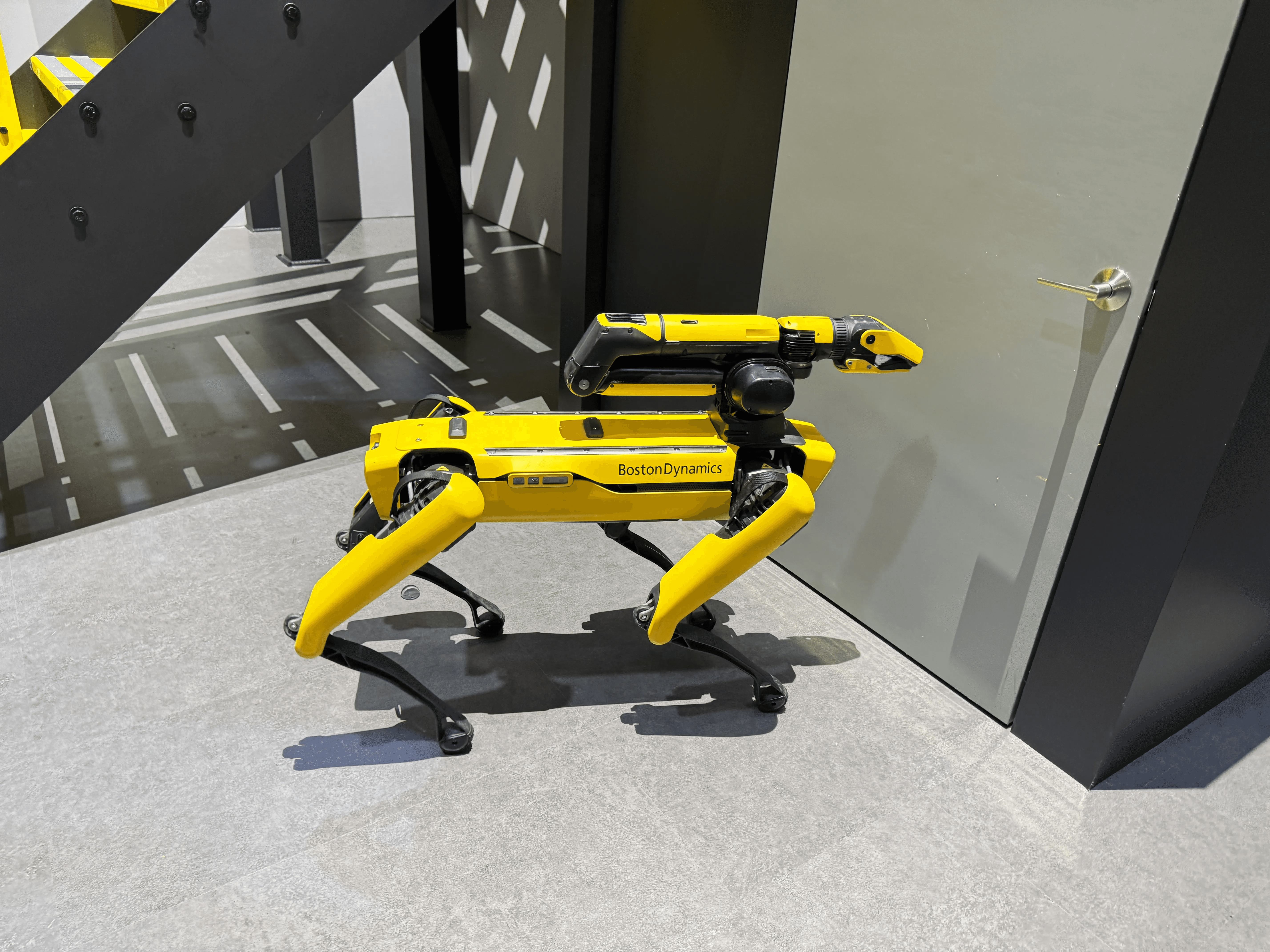
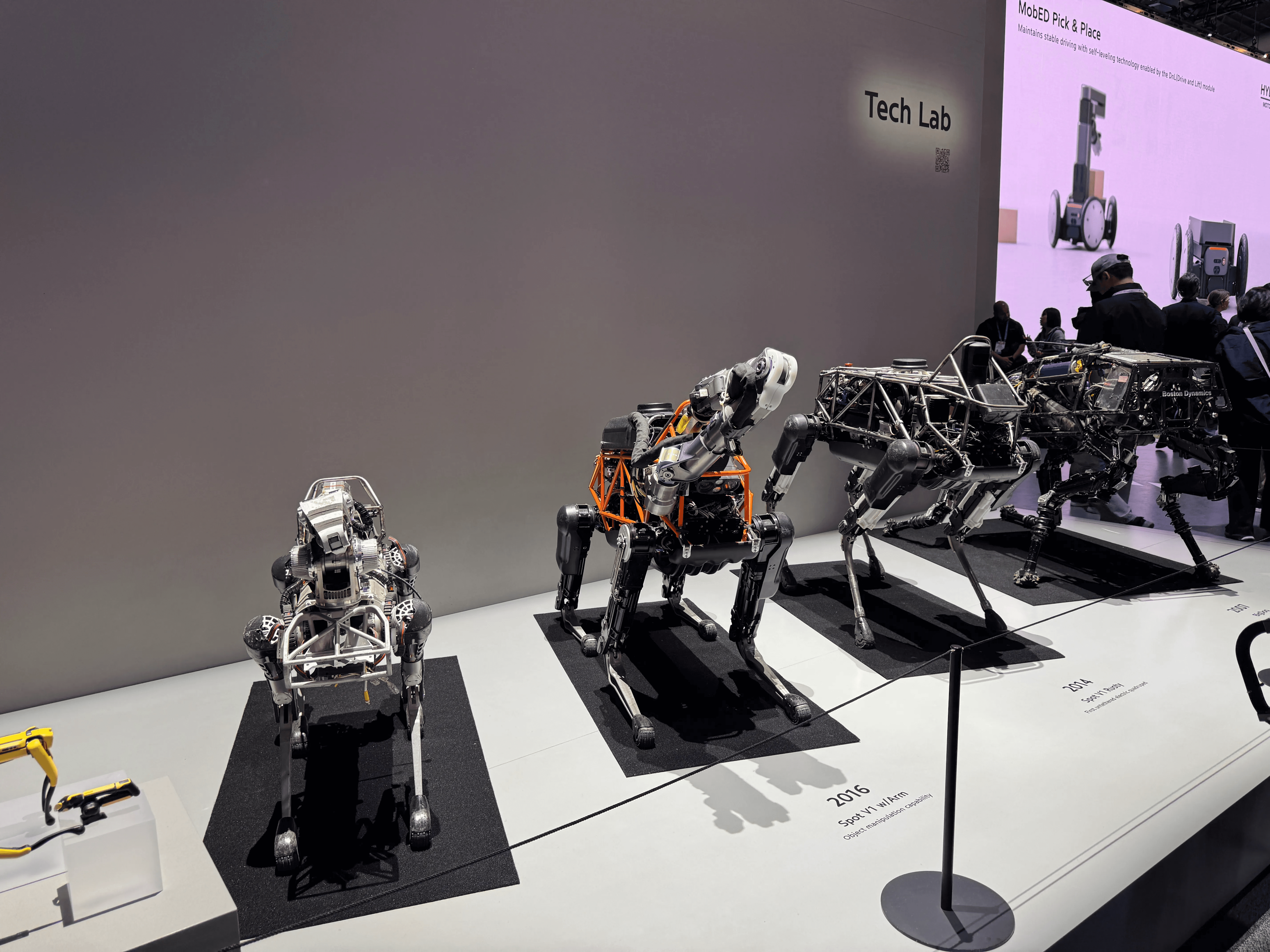
The areas that were particularly impressive were booths related to robotics, Physical AI, and autonomous driving. In these fields, “real-time response” was a common premise.
Autonomous vehicles or robot systems can quickly lead to danger with even a small delay, making on-device processing feel much more natural than cloud-centric structures.
On-device voice AI refers to a structure where the process of voice recognition, analysis, and response is handled within the device rather than the cloud.
Many cases encountered on-site were based on the premise of “environments where immediate responses are necessary even if the network is unstable,” and in such environments, on-device AI seemed to be closer to a fundamental structure rather than a choice.
In addition, the ability to process personal information locally and reduce cloud costs and network dependency were elements that various companies repeatedly emphasized.

💡 Overall Atmosphere Felt at CES 2026
The keywords felt at this CES can be summarized as on-device AI, Physical AI, voice-based agents, real-time interaction, and industrial application stages.
Rather than a technology exhibition, it felt more like a place with the message that “the technology is already sufficiently prepared, and now it's a question of who will dominate the market.” Startups were quickly trying in ways that deviated from the existing mold, while large companies were still forming high barriers based on infrastructure and capital strength.
It seemed that beyond the technology itself, how to solve problems and which market to capture first have become more important.
It left the impression that just having technology is not enough anymore, and it is difficult to create meaningful differentiation without a business model and market strategy together.

🔏 Memorable Points from the Perspective of Voice, Audio, AI
There were fewer booths featuring voice technology as the main focus than expected at this CES.
However, it didn't feel like the presence of voice had diminished. Rather, voice was naturally integrated as part of agents, multimodal interfaces, and real-time interactions within smart homes, robots, vehicles, and healthcare devices.
It felt like voice is no longer “a single technology” but rather becoming an essential component that completes experiences. Noteworthy elements included real-time voice processing, agent-based interaction, and emotion/state recognition.
📁 Moments When MAGO's Direction Came to Mind on Site
While seeing robots or physical devices continuously interacting with AI, MAGO's direction that had been pondered over became naturally aligned. In a Physical AI environment, it was impressive that understanding the human state and context and structuring the subsequent interaction go beyond merely recognizing commands.
In this flow, it seemed that the voice-based interaction, emotion/state recognition, conversation context, and agent structure that MAGO is handling can naturally lead to the next stage.
🖊️ A Conviction That On-Device Voice AI Will Become More Important
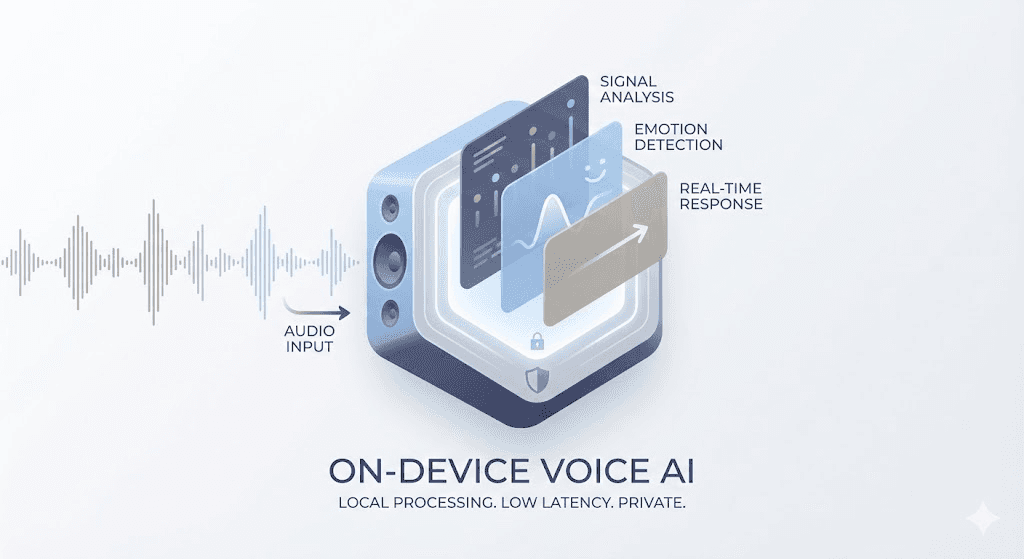
From the perspective of voice AI, the importance of on-device was particularly apparent at this CES.
In environments with autonomous driving, wearables, robots, and smart devices, simultaneous requirements for delay-free response, stability, and personal data protection are needed. Under these conditions, the limitations of cloud-centered structures seemed clear.
It felt that structures that can immediately process and respond to voices locally without relying on the network will increasingly become the default.
🧐 The Most Memorable Scene from a Developer's Perspective
Personally, the most impressive point was the feeling that the AI ecosystem is nearing completion. It was difficult to find areas without AI integration, from autonomous driving, household chores, industry, pets, education, to hobbies and energy.
As with the changes LLM has brought to society, the phase of AI redesigning the industrial structure itself seemed to be starting in earnest, and just observing what impact this change will have on each field felt fascinating.

After visiting CES, it felt like voice AI will advance in the direction of becoming more on-device-centric, creating personalized user experiences. This CES was also an opportunity to reaffirm where the technology direction MAGO is contemplating intersects.
I will continue to share changes encountered in the field from the developer's perspective!